
Sights in Helsinki
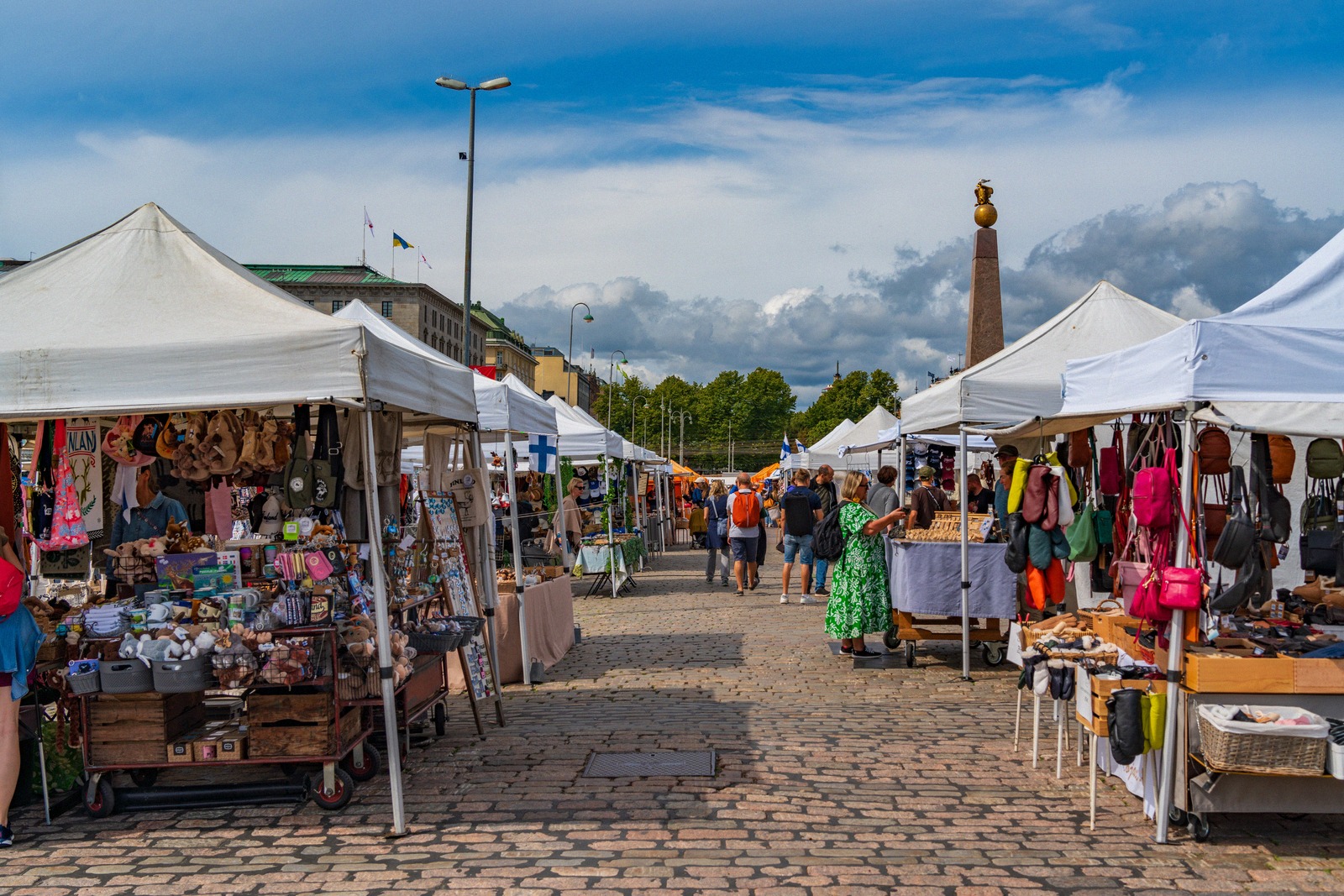
Market Square is just a few streets from the cathedral. From there, take the ferry to Suomenlinna or follow the waterfront to Kaivopuisto coastal park.
Six places in Helsinki
Helsinki Cathedral and Senate Square
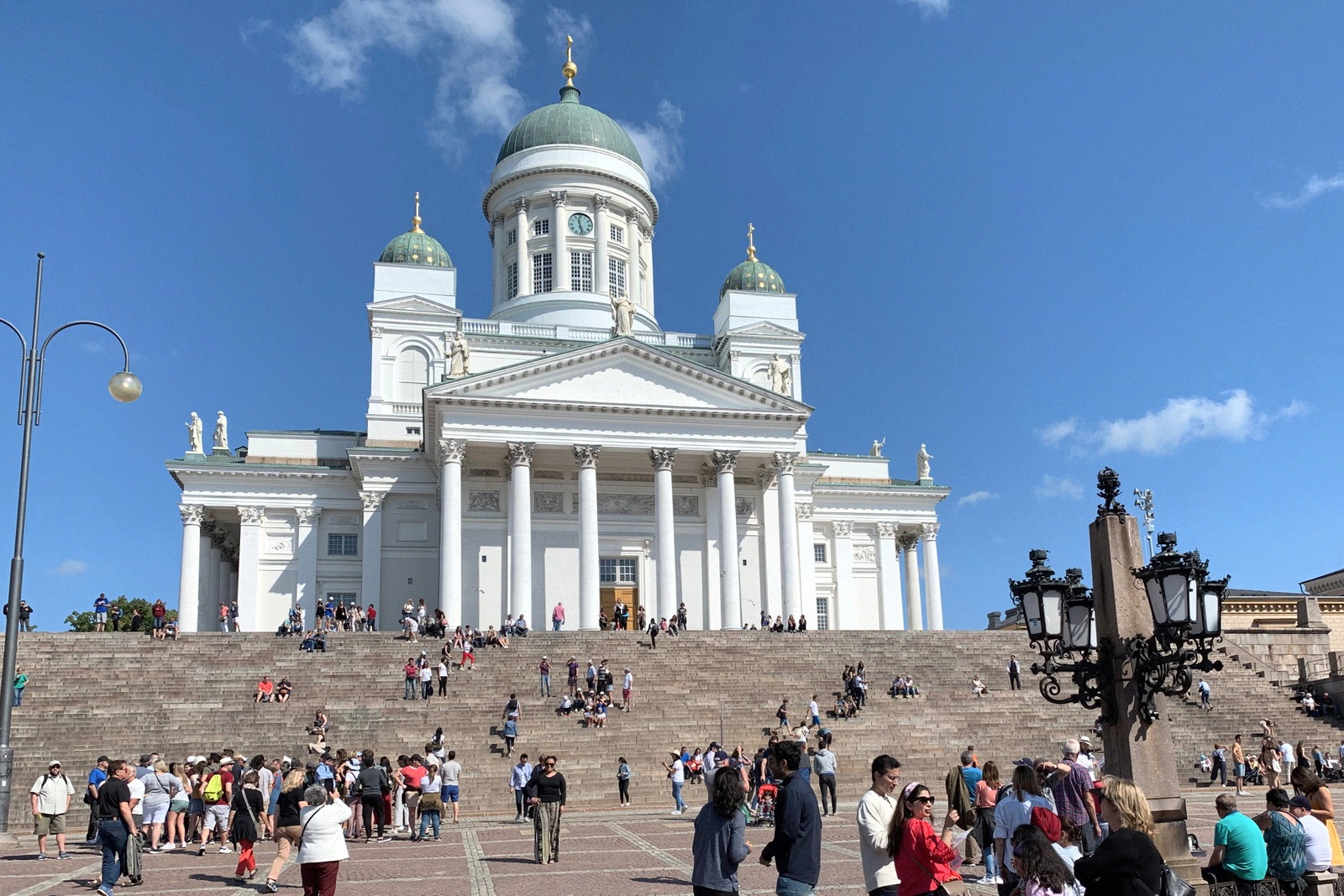
The university and Government Palace face each other across Senate Square in Helsinki. The white Lutheran cathedral rises above the broad steps.
Suomenlinna Sea Fortress
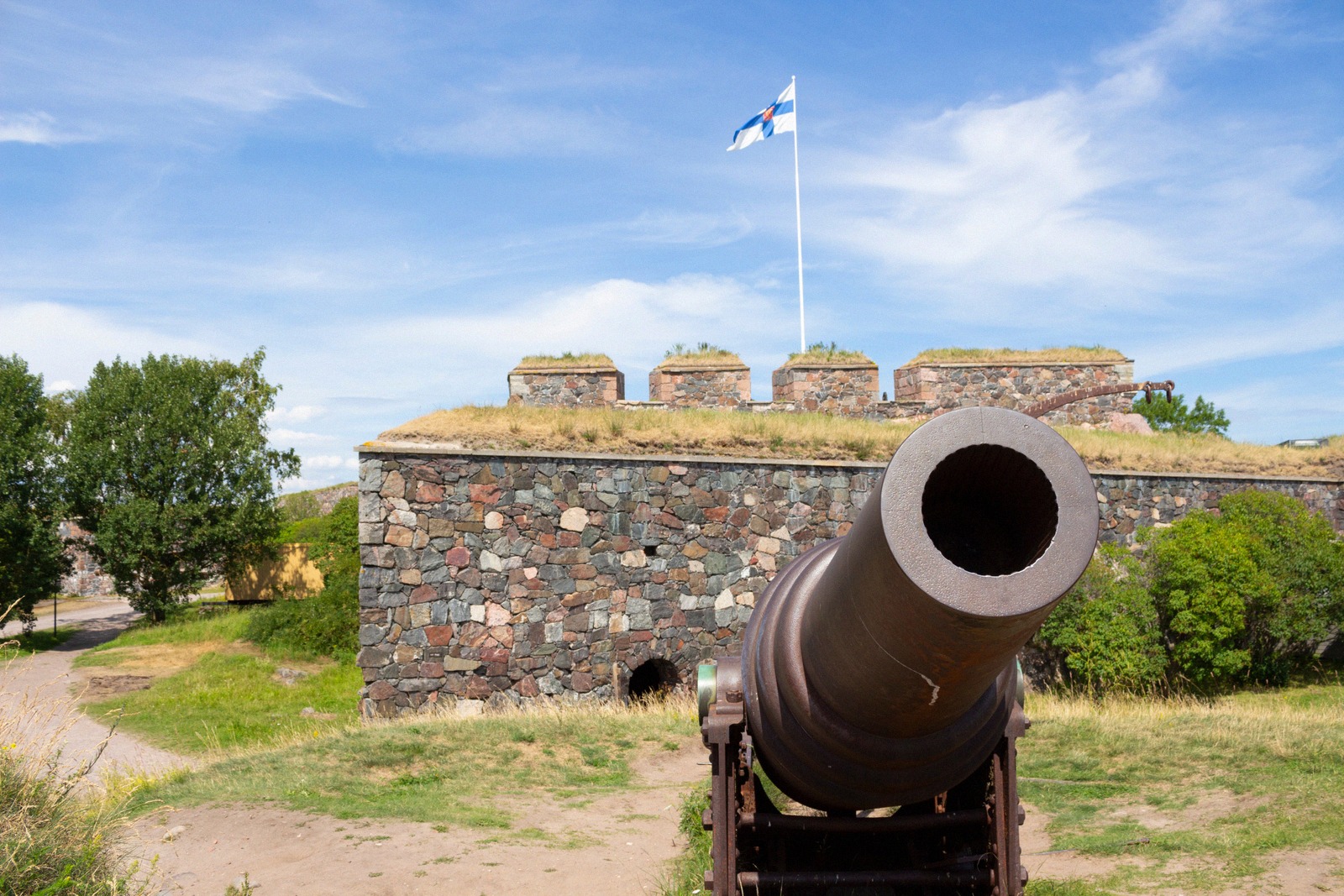
Suomenlinna Fortress off Helsinki is also a residential district. The Blue Route leads from the ferry quay through the Great Courtyard to the King’s Gate.
Oodi Central Library
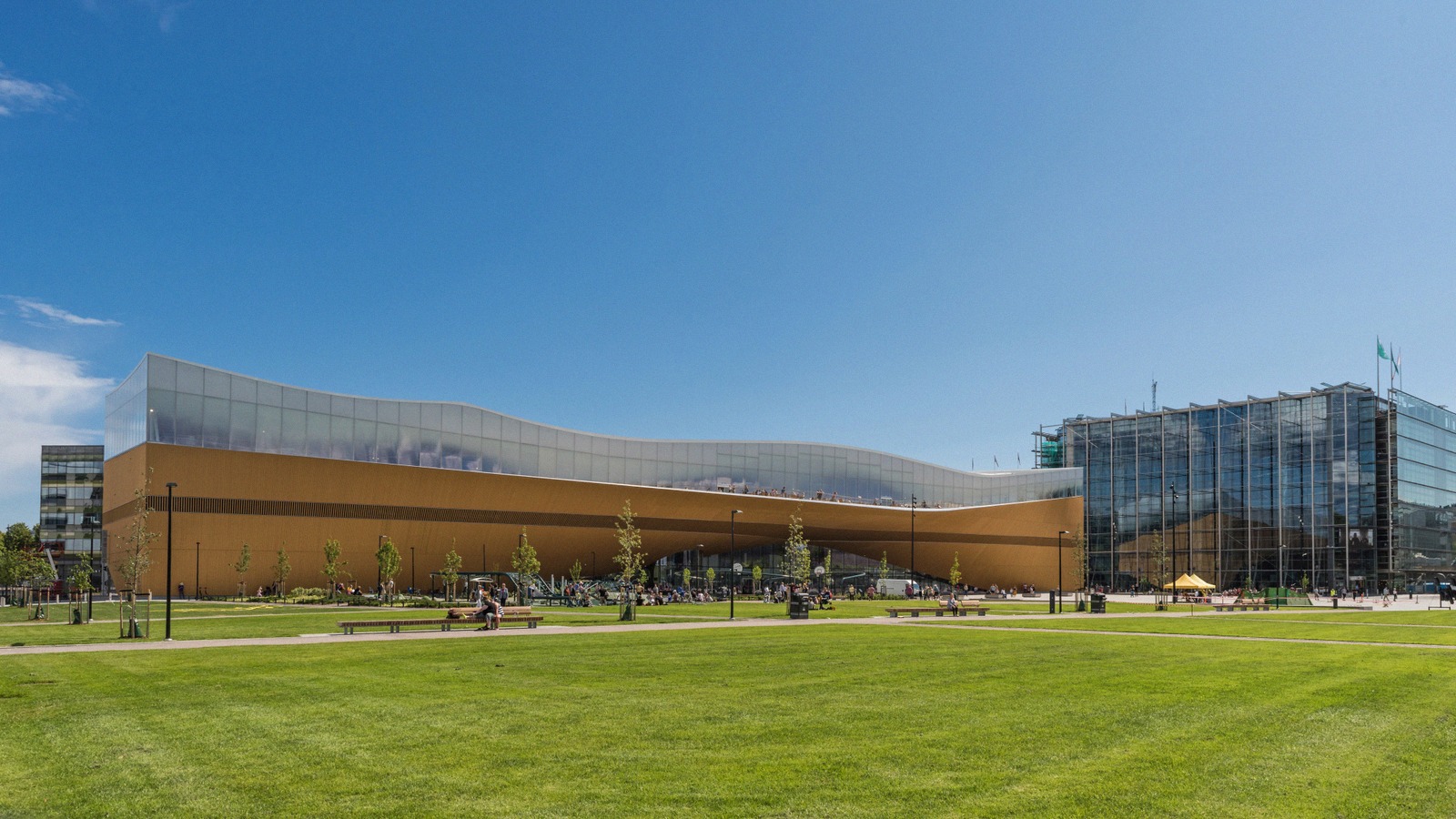
At Oodi on Helsinki’s Citizens’ Square, workshops and studios sit beneath a bright reading room. All three floors of the Central Library are free to visit.
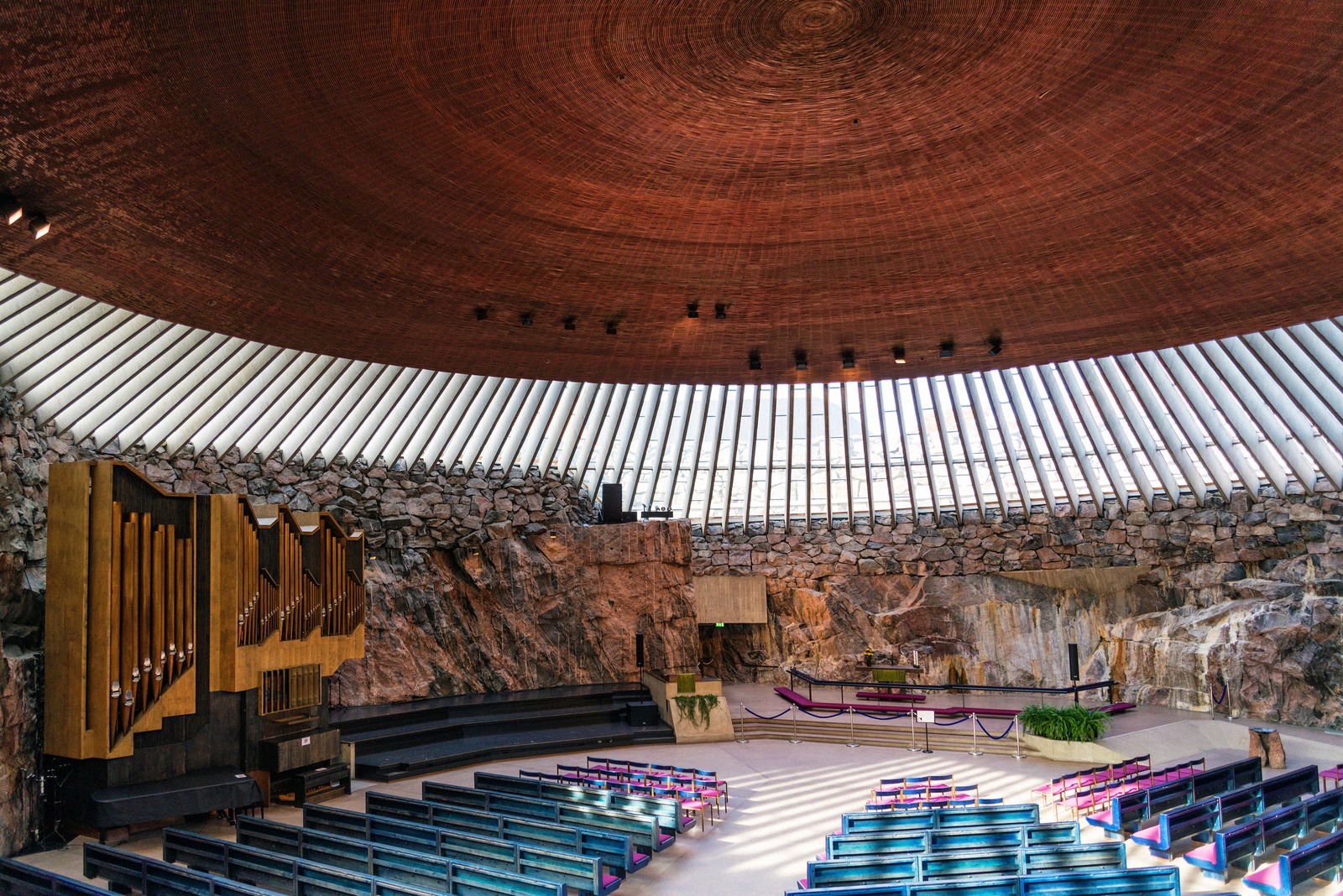
Temppeliaukio Church
A shallow copper dome covers rough granite walls in Helsinki’s Rock Church. The visitor entrance is on Lutherinkatu in the Töölö district.
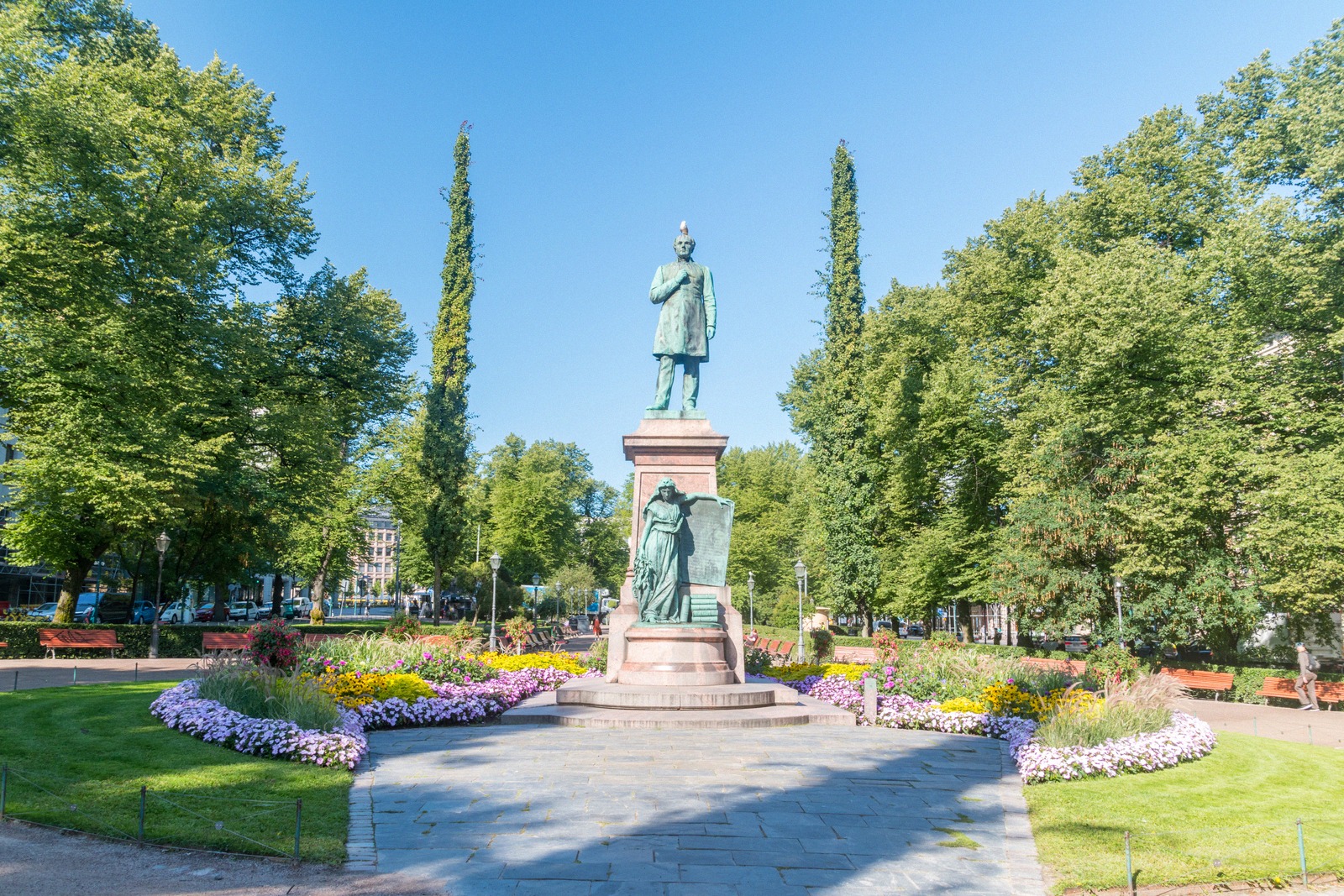
Esplanadi
Esplanadi runs from the Swedish Theatre to Market Square, passing the Runeberg monument, the historic Kappeli restaurant and an outdoor stage.
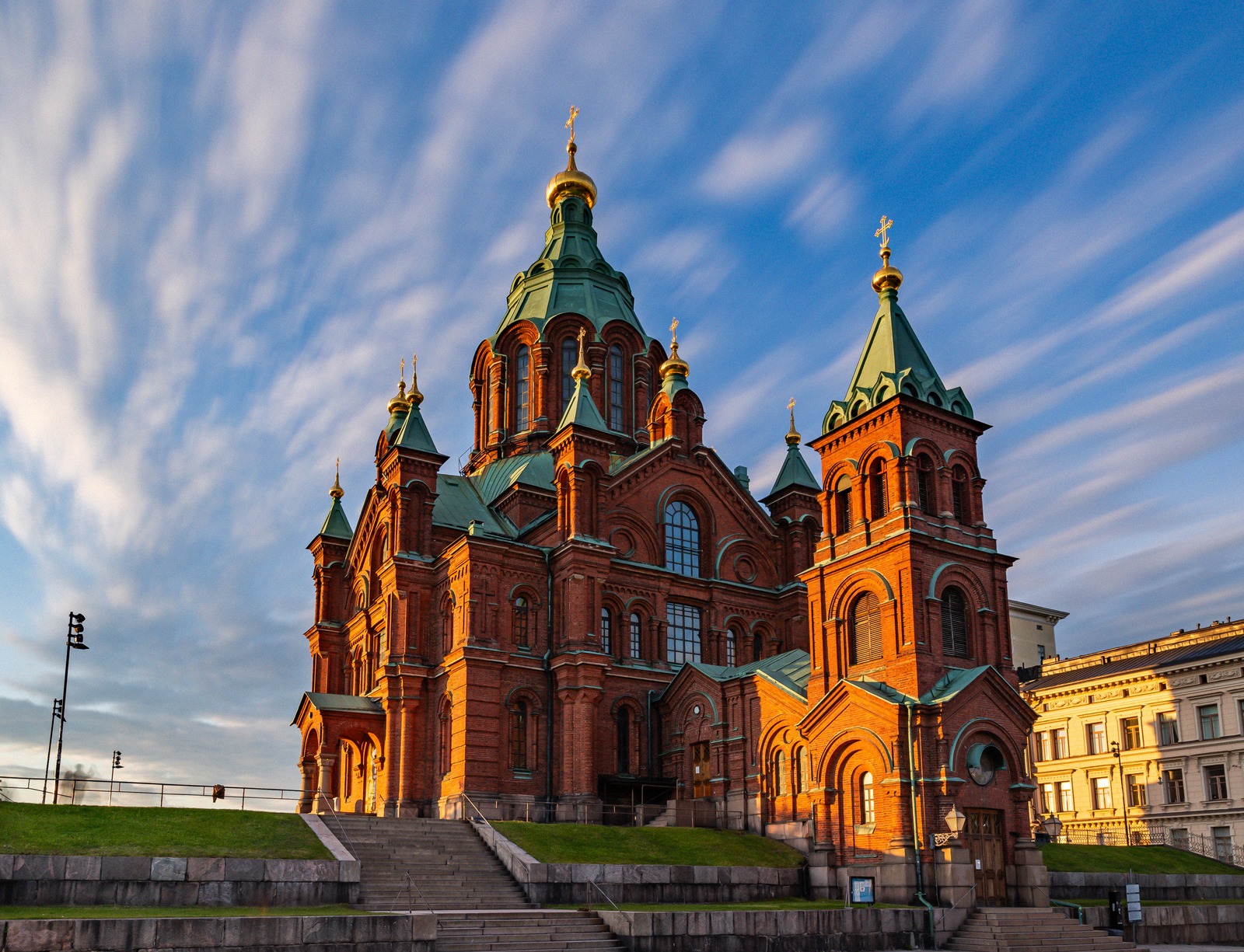
Uspenski Cathedral
Uspenski Cathedral above Helsinki’s harbour was built with bricks from Bomarsund Fortress. Inside stands an ornately decorated iconostasis.
On this page
From Senate Square to the harbour
From the foot of the cathedral steps, you can see the university and Government Palace on either side of the square. Follow Sofiankatu downhill to Kauppatori, where market stalls stand beside the water. For the Old Market Hall (Vanha Kauppahalli), turn right along the quay. Fishmongers and small places to eat share the hall’s narrow aisles.
Across the market, the golden domes of Uspenski Cathedral rise above Katajanokka. You can walk up to the cathedral for a view back across the harbour. West of the market, the Havis Amanda fountain marks the entrance to Esplanadi.
Art and architecture west of the station
Opposite the central railway station, the Ateneum displays Finnish painting and sculpture. Across the tracks, on Kansalaistori, Oodi Library leads from workshops up to a bright reading room. The route towards Töölö reaches Temppeliaukio Church, whose interior lies below the surrounding streets. These three very different buildings can fit into one day. A second art museum is worth a separate afternoon.
Islands, rocks and the southern neighbourhoods
Allow half a day for Suomenlinna. The ferry leaves from Market Square, and a footpath across the fortress islands begins beyond the landing stage. To stay on the mainland, follow the southern waterfront to Kaivopuisto instead. Bare rock rises above the lawns. The Ursa observatory stands on one outcrop, and on 1 May Helsinki residents gather in the park for picnics.
The return walk through the southern neighbourhoods passes small shops and galleries in the Design District. For Finnish furniture design, the Architecture & Design Museum on Korkeavuorenkatu is a worthwhile detour. For an evening sauna by the water, Löyly public sauna is in Hernesaari.
Churches from Senate Square to Kamppi
The cathedral on Senate Square and Uspenski Cathedral face each other across South Harbour: a white Neoclassical Lutheran church on one side, brickwork and gilded domes belonging to the Orthodox congregation on the other. The walk between them crosses Market Square. Each interior deserves a separate stop.
West of the centre, Temppeliaukio Church and Kamppi Chapel take different forms: Temppeliaukio is built into granite, while Kamppi is an enclosed timber structure on Narinkkatori. From the station, you can combine Kamppi with the walk along Fredrikinkatu towards Temppeliaukio. Worshippers and other visitors take priority over sightseeing inside the churches.
Havis Amanda by Market Square
Where Esplanadi meets Kauppatori, a young bronze woman stands in a fountain basin. Ville Vallgren designed Havis Amanda in Paris; the statue was unveiled in Helsinki in 1908. The woman rising from the sea represents the Baltic city. Sea lions sit around the basin, with fish at her feet. The granite base and dark bronze stand out against Market Square’s pale façades.
Helsinki residents call the statue Manta. Placing a student cap on her head is part of the Vappu spring celebrations. On a walk, the fountain links the harbour with Esplanadi Park: Kappeli and the stage are just west, while Uspenski’s domes rise east above the quay.
Parliament House on Arkadianmäki
A broad flight of steps and a row of columns make Parliament House recognisable from Mannerheimintie. Finland’s 200-member, single-chamber parliament meets behind the reddish granite façade. Johan Sigfrid Sirén designed the building, constructed between 1926 and 1931. Its strict symmetry contrasts with the curved glass façade of Oodi Library across the road.
Seeing the exterior and visiting inside are separate activities. To watch a plenary session, you can enter the public gallery; this does not give access to a self-guided tour of the offices. Interior visits follow parliament’s visitor and security rules. The square in front of Oodi gives a view back towards the steps and columns without entering the building.
Kaisaniemi Botanic Garden
North of the station, Kaisaniemi Botanic Garden holds plants from the University of Helsinki’s scientific collections. It has occupied this site since 1829. Glasshouses stand among the outdoor paths; in the Palm House, a themed route traces the evolution of plants. A garden walk and a visit to tropical plants can be combined without travelling far from the centre.
The glasshouses have their own opening hours. The university’s second garden, at Kumpula farther north, is a separate outing, with cultivated plants and collections arranged geographically. Kaisaniemi is closer for a short visit near the station. Kumpula has a separate seasonal opening period to consider when planning a visit.
Old Market Hall by South Harbour
Vanha Kauppahalli stands on Eteläranta, south of Market Square. Opened in 1889, the hall contains a row of small shops and food stalls. Patterned brickwork distinguishes the exterior; inside, narrow aisles run between the counters. Fish, bread and coffee give a visit a different focus from the outdoor stalls on Kauppatori.
The hall is a place to stop for food on a walk along South Harbour. From Senate Square, Sofiankatu leads to the market, then the quay continues south. Each trader has its own range and opening hours, so the choice of food depends on when you visit. The visit can be combined with Havis Amanda and Esplanadi.
Finlandia Hall beside Töölönlahti
Alvar Aalto’s Finlandia Hall stands on the western shore of Töölönlahti. Its pale marble façade and varied building forms can be seen from the waterside park path. The main building was completed in 1971, with the congress wing following later. Architecture and music meet European political history here: in 1975, the Final Act of the Conference on Security and Co-operation in Europe was signed in the hall.
Alongside the events programme, the Finlandia exhibition gives visitors access to the building. It explores the work of Alvar, Aino and Elissa Aalto and is a separate visitor attraction. A walk beside the bay gives a view of the exterior; concerts and the exhibition offer access inside. The hall is within walking distance of Parliament House and Oodi, near the southern end of the bay.
Korkeasaari: an island zoo
Korkeasaari lies east of the centre on a rocky, wooded island. The landscape is part of the visit: paths rise and fall between animal enclosures, with views across the water at the edges. The name means “High Island”. If you have a pushchair or want to avoid slopes, look at the paths on the zoo map before choosing a route.
Bridges provide access to the island on foot. One approach is from Mustikkamaa, another from Nihti across Finkensilta. Set aside time for the zoo rather than treating it as a quick detour from Senate Square. The former bus route 16 no longer serves the zoo. When choosing a connection, consider the stops near the entrance and the walk from each.
Kaivopuisto and the rocks above the sea
At the southern edge of the city centre, Kaivopuisto alternates between lawns, groups of trees and bare rock outcrops. The small observatory of the Ursa astronomical association stands at the top. Paths below overlook the offshore islands and passing ships. The waterfront and inner park walks differ: the lower path follows the water, while the ground inside the park rises towards the observatory.
The park developed around a spa in the 19th century and later became a public green space. Helsinki residents gather here for Vappu picnics. On an ordinary day, a walk from South Harbour can continue to the rocks and return through the southern residential streets. To visit Suomenlinna afterwards, you need to return to the ferry landing at Market Square.
Linnanmäki and its wooden roller coaster
Linnanmäki lies north of the centre and needs more time than a stop on a city walk. Its best-known ride is Vuoristorata, the wooden roller coaster that has been part of the park since 1951. Its timber framework and the newer rides reflect the amusement park’s long history. Next door, Sea Life aquarium is a separate attraction.
Height and age restrictions determine which rides families can enjoy together. The park opens seasonally, and each ride has its own operating days and hours.
Sibelius Park and the steel monument
In Töölö, the Sibelius Monument stands among trees and rocks. Eila Hiltunen created the group of welded steel tubes, unveiled in 1967. They resemble organ pipes but do not form a playable instrument. A sculpted portrait of the composer Jean Sibelius stands alongside. The contrast between abstract form and recognisable face rewards a look from several angles.
The park can be combined with a walk along Töölö’s waterfront. From Temppeliaukio Church, continue north; public transport offers a direct return to the centre. Unlike the outdoor monument, Finlandia Hall, on the other side of Töölö, is an events venue.
Kamppi Chapel on Narinkkatori
Between shopping centre and square stands an enclosed, rounded wooden structure. Kamppi Chapel was built in 2012 to a design by K2S. Outside, you see its curved shell; inside, daylight enters indirectly around the roof edge. Wall surfaces and benches draw attention to the shape of the space. There is no conventional sequence of nave, tower and altar windows.
The chapel offers space for quiet reflection in a busy district. Sound may form part of art installations inside. Conversations and phone calls belong outside. Personal photography is allowed with the flash off and without disturbing others. From Narinkkatori, you can walk on to Amos Rex or Oodi Library.