
Helsinki Cathedral and Senate Square
The white dome above the neoclassical city centre
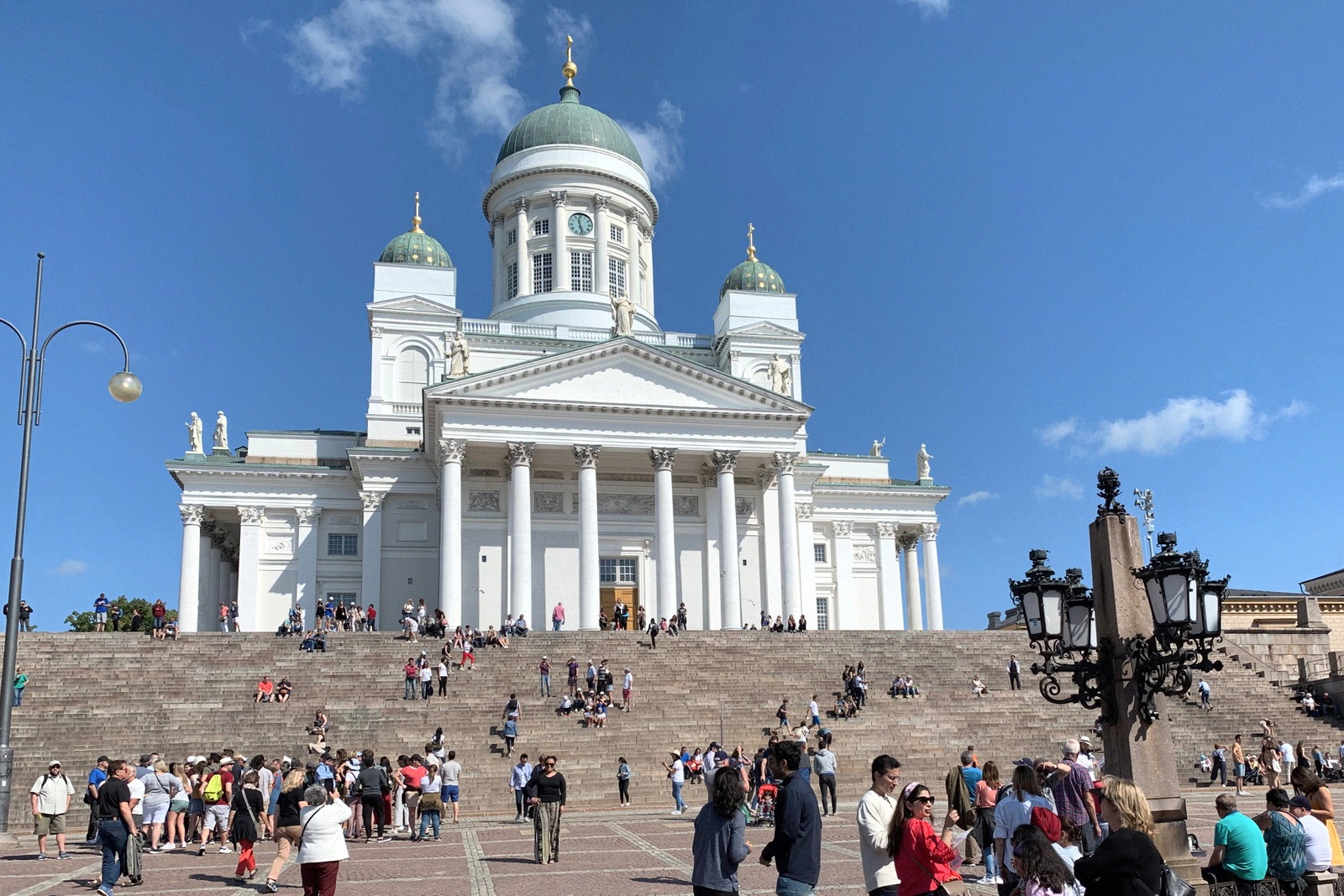
Helsinki’s white cathedral rises above the broad steps of Senate Square. From the steps, two more buildings by the architect Carl Ludvig Engel come into view: the Government Palace on the left and the university’s main building on the right.
A square for the new capital
The Senate moved into the building on the eastern side of Senate Square in the early 19th century, giving the square its name. The university’s main building was built opposite, on the western side. Its colonnade echoes that of the Government Palace. The monument in the centre commemorates the Russian emperor Alexander II and was added later, in 1894.
The steps and the apostles
The cathedral was completed in 1852, after Engel’s death. His successor, Ernst Lohrmann, added the four smaller towers around the main dome. Twelve figures can be seen on the pediments from below. These zinc statues of the apostles face in all four directions.
Inside the Lutheran cathedral
Inside, the building’s equal-armed cross plan becomes clear. Statues commemorate the reformers Martin Luther, Philipp Melanchthon and Mikael Agricola.
Down to the harbour
Streets on the southern side of the square lead down to Market Square and the harbour. The row of houses here is noticeably lower than the grand state buildings. Beyond it, the stalls on Market Square and the Old Market Hall offer places to pause by the water. The red Uspenski Cathedral stands to the east.
Nearby
Esplanadi
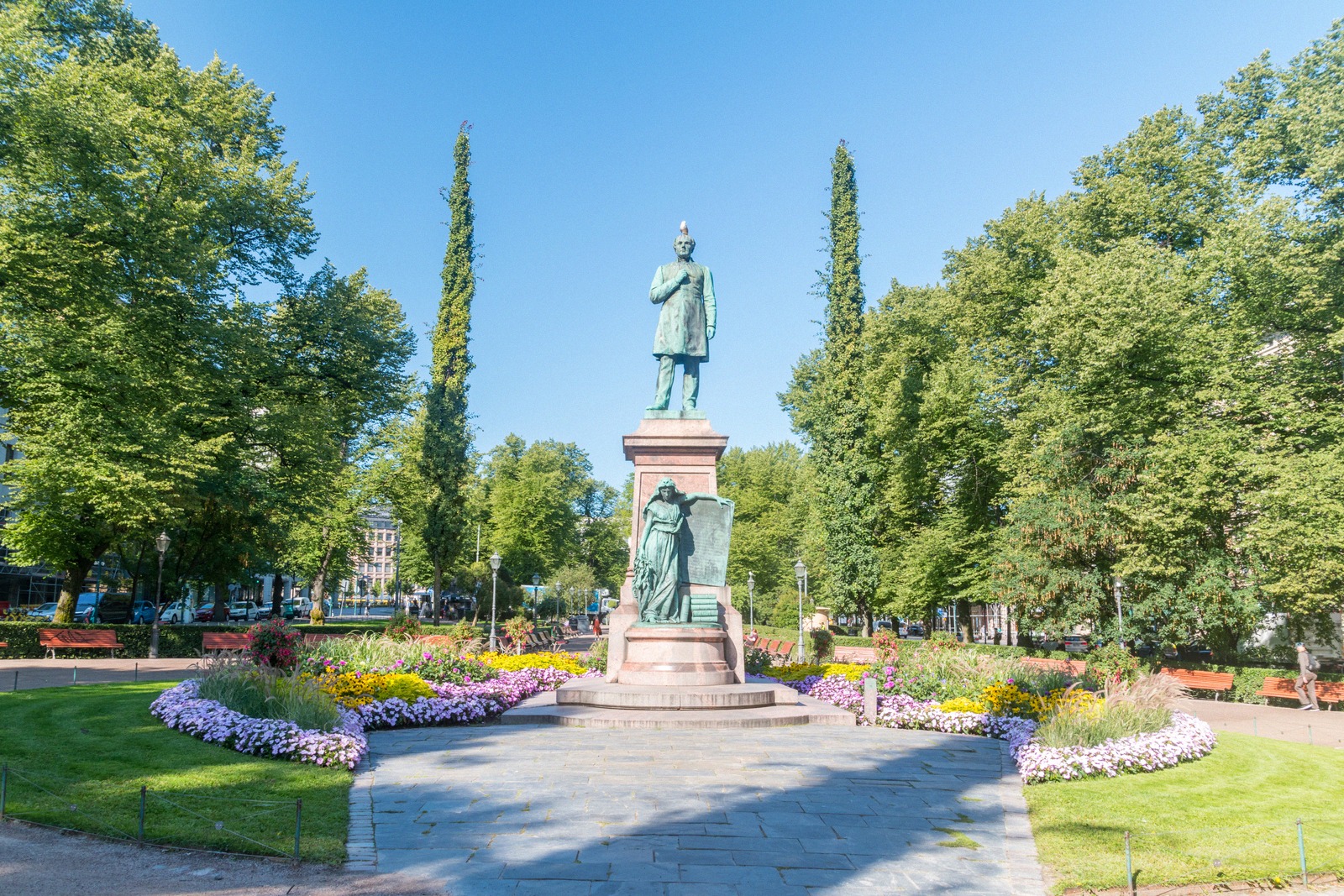
Esplanadi runs from the Swedish Theatre to Market Square, passing the Runeberg monument, the historic Kappeli restaurant and an outdoor stage.
Uspenski Cathedral
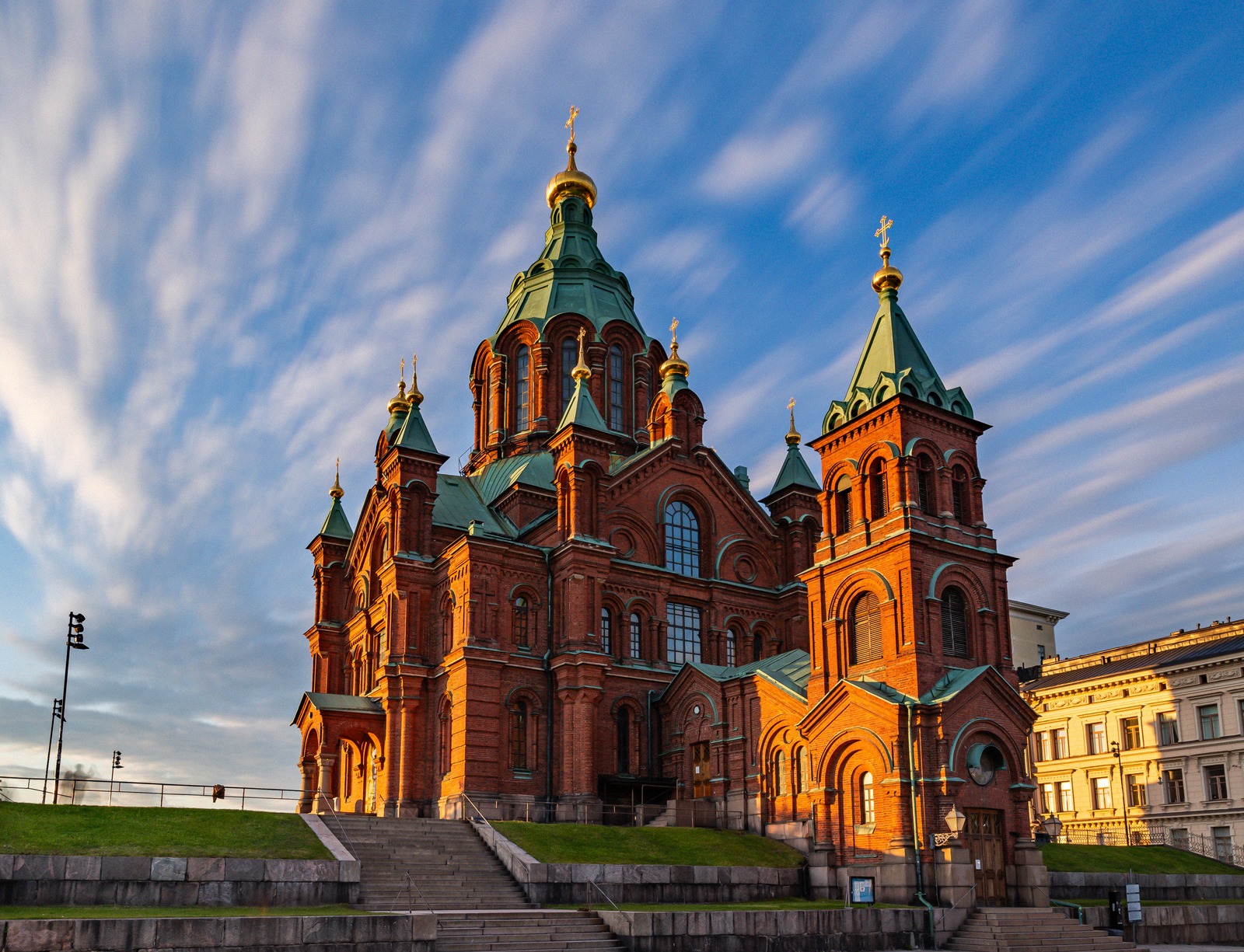
Uspenski Cathedral above Helsinki’s harbour was built with bricks from Bomarsund Fortress. Inside stands an ornately decorated iconostasis.
Oodi Central Library
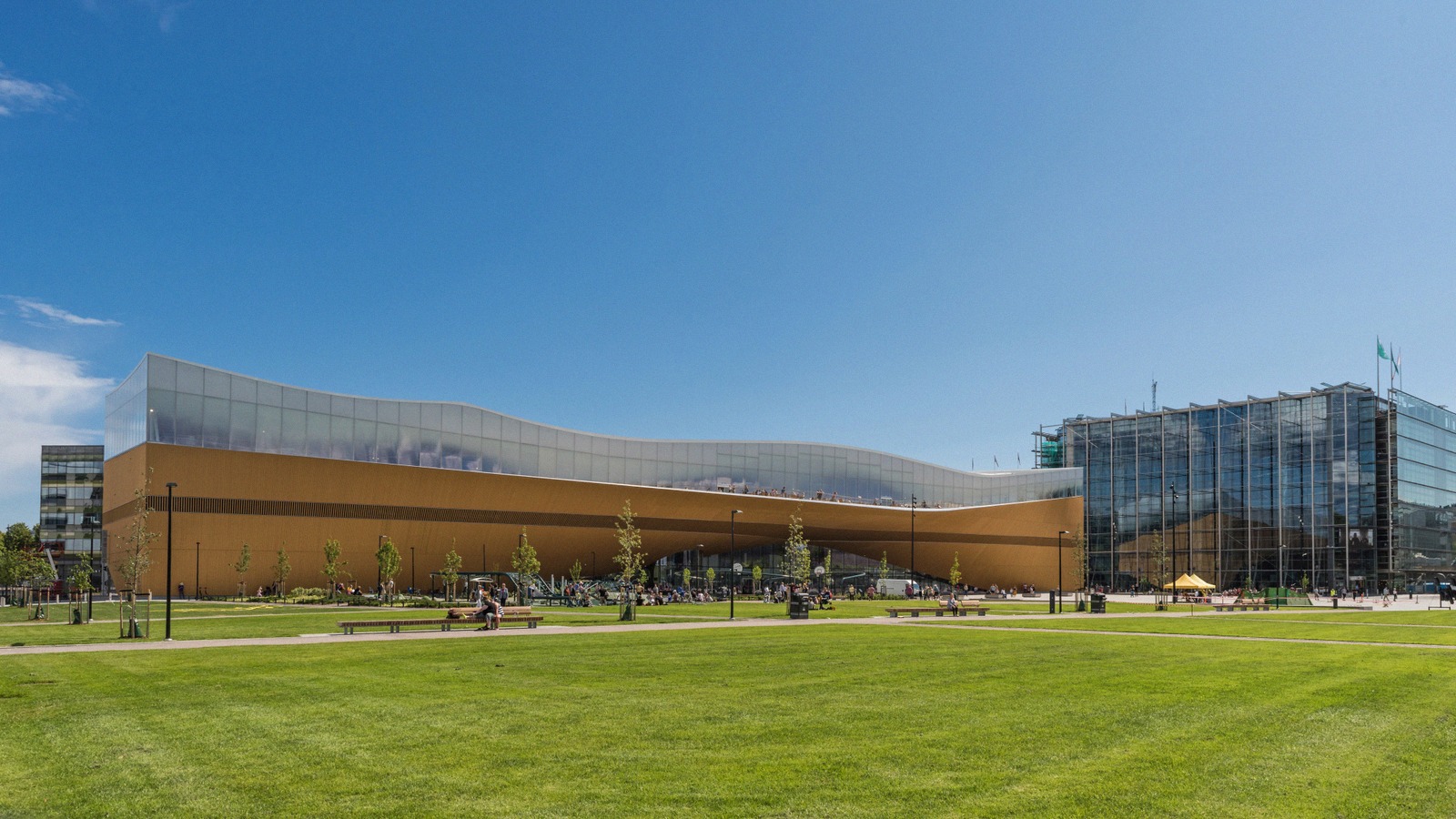
At Oodi on Helsinki’s Citizens’ Square, workshops and studios sit beneath a bright reading room. All three floors of the Central Library are free to visit.